If you recently moved to Omaha from a warmer climate, frozen pipes may sound like a problem that begins only after a major blizzard. In reality, one exposed water line, an attached garden hose, a drafty cabinet, or an unheated garage can create trouble during an ordinary stretch of bitter weather.
The good news is that most frozen-pipe problems are preventable. A little preparation before winter, a few adjustments during a cold snap, and knowing where your water shutoff is located can protect your home from an expensive surprise.
This guide explains which pipes are most vulnerable in Omaha-area homes, what to do before and during freezing weather, how to respond if a faucet stops working, and when to call a plumber or Metropolitan Utilities District.
How Do You Prevent Frozen Pipes in Omaha?
Before cold weather arrives, disconnect garden hoses, protect exposed plumbing, seal drafts near water lines, and learn how to shut off the water to your home. During a severe cold snap, keep the heat running, allow warm indoor air to reach plumbing near exterior walls, and consider letting a small amount of cold water run from a faucet supplied by a vulnerable pipe.
Do not rely on one universal outdoor temperature to decide when a pipe is safe. Risk depends on how long the cold lasts, where the pipe is located, how well the area is insulated, and whether wind is pushing cold air through a gap near the plumbing.
If a faucet produces only a trickle or no water during freezing weather, treat that as a possible frozen pipe. Keep the faucet open, look for leaks, and use only gentle, controlled heat if the frozen section is visible and safe to reach. Never use a torch or other open flame.
Why Frozen Pipes Are a Real Omaha Winter Risk
Omaha winters include repeated freeze-and-thaw cycles, sharp temperature drops, strong winds, and periods of below-zero cold. The local National Weather Service defines a freeze as an air temperature of 32 degrees Fahrenheit or lower and a hard freeze as 28 degrees or lower for at least a few hours. Those definitions help describe outdoor conditions, but the temperature immediately around a pipe is what matters inside a home.
Pipes are most likely to freeze when they are exposed to severe cold or located in areas that do not receive enough heat. Common trouble spots include:
- Outdoor hose bibs and water lines that still have hoses attached
- Pipes in crawl spaces, unfinished basements, attics, and garages
- Plumbing inside cabinets along exterior walls
- Water lines near foundation openings, damaged weatherstripping, or other air leaks
- Plumbing serving additions, overhangs, wet bars, or rooms that receive less heat
- Vacant homes or houses where the furnace has failed
Older Omaha homes may have plumbing in unusual locations, while newer homes can still have a vulnerable garage line, exterior faucet, or draft around a utility penetration. Age alone does not determine the risk.
Water expands as it freezes. The resulting ice can block the pipe and increase pressure between the blockage and a closed faucet. A pipe may split while it is frozen, but the leak might not become obvious until the ice thaws and water begins flowing again.
Find Your Water Shutoffs Before You Need Them
One of the most valuable winter-preparation tasks is learning how to stop the water quickly. Do this on a calm day, not while water is spreading across a finished basement.
The main shutoff inside the home
Look for the valve where the water service enters the building. In many Omaha-area houses, it is in the basement or a utility area near the water meter. Its location varies, especially in older houses, additions, and remodeled basements.
Make sure the valve is accessible and clearly identified. Do not bury it behind storage, furniture, or a finished wall. If the valve is corroded, stuck, leaking, or difficult to understand, ask a licensed plumber to inspect it. Avoid forcing an old valve because it may break when you need it most.
The outdoor stop box
M.U.D. explains that the stop box is the small round metal access point usually located in or near the sidewalk. It provides access to the curb stop or valve that controls water service to the property. This is not the same as the ordinary indoor shutoff that a homeowner typically uses.
If you cannot stop a serious leak inside the house, or the problem involves the service line or public main, call M.U.D. rather than attempting to operate underground utility equipment yourself. M.U.D. lists 402-554-7777 as its 24-hour number for water-related emergencies.
Your Fall Frozen-Pipe Prevention Checklist
Finish these tasks before the first sustained freeze. If you move into an Omaha home during winter, review them as soon as practical.
Disconnect every outdoor hose
Remove hoses, splitters, timers, spray nozzles, and other attachments from outdoor faucets. A connected hose can trap water and prevent a frost-resistant faucet from draining as designed. Drain the hose before storing it.
If the house has an interior shutoff for an outdoor faucet, follow the plumbing system’s instructions for closing and draining that line. Do not assume every outdoor faucet has a separate shutoff or that every handle labeled by a previous owner is accurate.
Inspect exposed plumbing
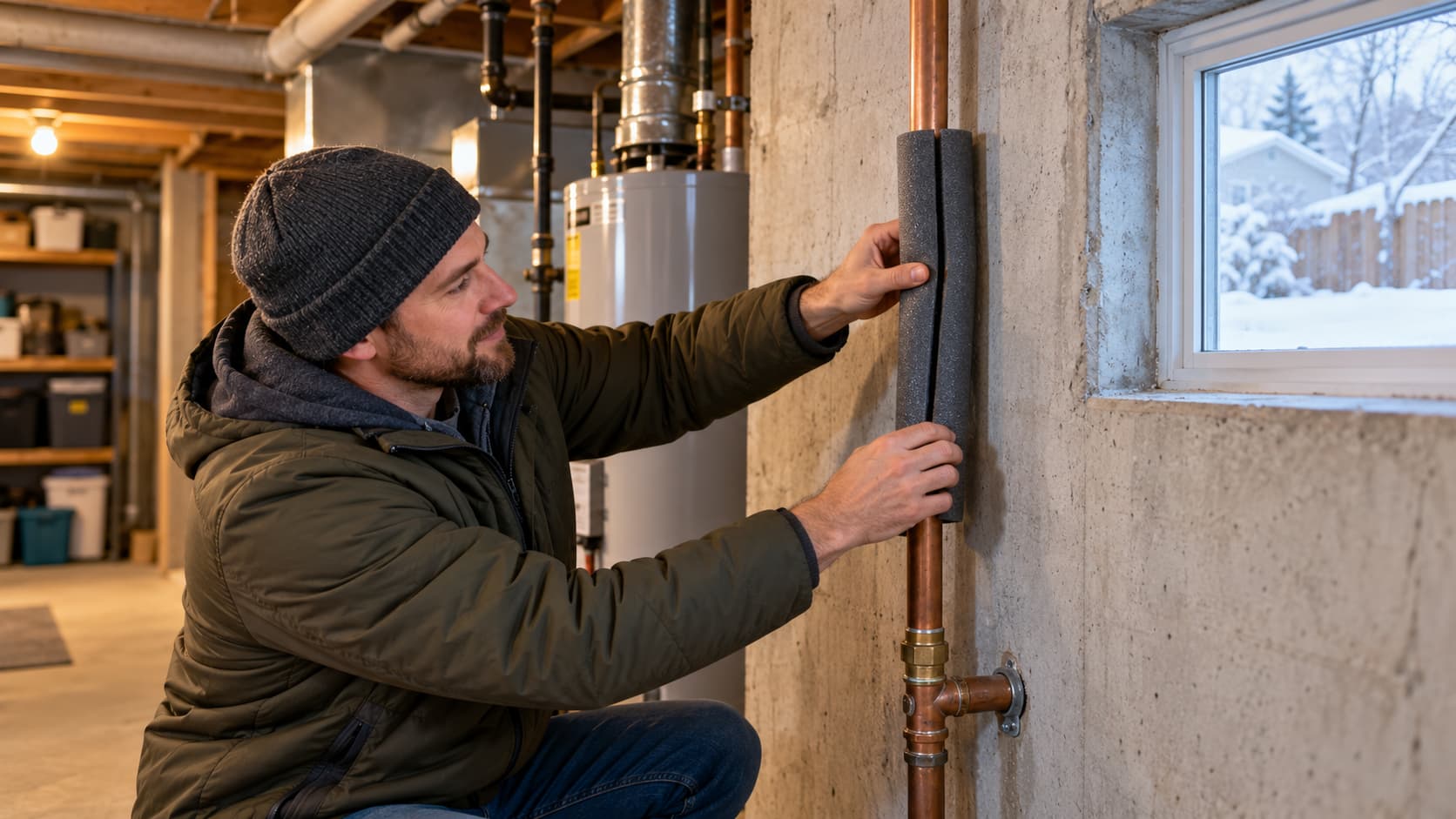
Look for water lines in unfinished spaces, along exterior walls, near basement windows, and above garage ceilings. Pipe sleeves can help protect exposed lines, but insulation does not create heat. A pipe in a very cold area may also need the draft corrected or the space safely heated.
Use heat cable only if it is specifically designed for the pipe material and location. Choose a listed product, install it exactly as directed, and never overlap the cable unless the manufacturer expressly permits it. Damaged or improvised heating products can create a fire hazard.
Seal cold-air leaks near pipes
Cold moving air can freeze a pipe even when the surrounding room feels tolerable. Check around sill plates, utility openings, basement windows, doors, and penetrations for plumbing, cable, or electrical service. Use materials appropriate for the opening and maintain required clearances around combustion appliances and vents.
Prepare irrigation and seasonal water systems
An underground sprinkler system, backflow preventer, pool line, detached-building water supply, or outdoor kitchen may require its own winterization procedure. The correct method depends on the system. If you are unsure what was installed, have an irrigation or plumbing professional identify the components before attempting to blow out or drain them.
Check the furnace and utility areas
A reliable heating system helps protect both people and plumbing. Replace or clean the furnace filter as required, keep supply and return vents open, and make sure utility rooms are not isolated from necessary heat. For a broader seasonal overview, see the MoveToOmaha winter weather guide.
Add simple leak protection
Battery-powered water alarms are inexpensive and can be placed near a water heater, washing machine, sump area, utility sink, or known plumbing trouble spot. Smart leak sensors can send an alert while you are away. More advanced automatic shutoff systems can close the water when abnormal flow is detected, but they should be selected and installed for the home’s plumbing configuration.
What to Do During an Omaha Cold Snap
When the forecast calls for extreme cold, focus on the pipes with the greatest exposure rather than randomly dripping every faucet in the house.
- Keep the heat on. Maintain a steady indoor temperature and avoid a deep overnight setback during severe cold.
- Open selected cabinet doors. Allow warm room air to reach pipes under sinks on exterior walls. Move cleaners and chemicals out of reach of children and pets first.
- Keep the garage door closed. This is especially important when water lines run through or above an attached garage.
- Do not block heat to plumbing areas. Keep necessary vents open and avoid closing off a cold room that contains water lines.
- Watch known trouble spots. Check faucets, exposed pipes, and rooms that have frozen before.
- Use a small stream when appropriate. M.U.D. and the American Red Cross advise that running water, even at a trickle, can help prevent a vulnerable pipe from freezing.
Dripping a faucet is a temporary cold-weather precaution, not a repair for poor insulation or a persistent air leak. Once the weather improves, address the underlying weakness.
If You Leave Omaha During the Winter
Do not turn the furnace off while the house is vacant. M.U.D. recommends keeping it on at a lower setting and having someone briefly run the faucets daily during cold weather. The safest setting depends on the house, pipe locations, insulation, and forecast, so a single number is not appropriate for every property.
Before a winter trip:
- Confirm that the furnace is operating and the filter is not clogged.
- Arrange for a trusted person to check the home, especially during a cold snap or power outage.
- Make sure the person knows where the indoor water shutoff is located.
- Use temperature and leak alerts if reliable internet and power are available.
- Keep interior doors open where needed for heat circulation.
- Review your insurance policy’s requirements for a vacant or temporarily unoccupied home.
For a long absence or a property that will not be heated normally, ask a plumber about a complete winterization. Properly draining a plumbing system involves more than closing one valve, and incomplete work can leave water trapped in pipes, fixtures, appliances, toilets, and valves.
Signs That a Pipe May Be Frozen
A frozen pipe does not always announce itself with visible ice. Warning signs include:
- No water or only a trickle from one faucet
- Normal flow at some fixtures but no flow in one part of the house
- Frost on an exposed pipe
- A bulge, crack, or damp area along a pipe
- Unusual sounds when a faucet is opened
- Water stains, dripping, or pooling as temperatures rise
Check whether the problem affects both hot and cold water and whether neighbors are also without service. A broader outage or water-main issue can resemble an isolated plumbing problem.
How to Thaw a Frozen Pipe Safely
If the frozen area is visible, accessible, and undamaged, the American Red Cross recommends keeping the affected faucet open and applying gentle heat. As the ice melts, water can move through the line and out of the faucet.
Safe methods may include an electric heating pad wrapped around the pipe, a hair dryer, or towels soaked in hot water. Begin near the open faucet and work toward the frozen section so melting water and pressure have a path out.
Never use a blowtorch, propane heater, charcoal device, or other open flame. Excessive heat can damage the pipe, ignite nearby materials, or create dangerous fumes. Keep portable electrical equipment away from standing water and follow all product safety instructions.
Stop and call a licensed plumber when:
- You cannot locate or reach the frozen section.
- The pipe is inside a wall, ceiling, or other concealed space.
- You see a crack, bulge, leak, or water stain.
- You cannot safely apply controlled heat.
- The pipe does not thaw or freezes repeatedly.
- You are uncertain whether the problem is on private plumbing or the utility side.
What to Do If a Pipe Bursts
Act quickly, but do not enter standing water if electrical equipment, outlets, or wiring may be involved.
- Shut off the water. Use the home’s main shutoff if it is safe and functional.
- Call for help. Contact a licensed plumber. Call M.U.D. at 402-554-7777 for a water-related emergency involving the utility, service shutoff, or a situation you cannot control inside.
- Address electrical danger. If water is near electrical equipment or you cannot safely reach the panel, stay out and contact the appropriate emergency professional.
- Protect the property if safe. Move belongings away from water, place containers under minor drips, and begin removing standing water only when hazards are controlled.
- Document the damage. Take photos and video before discarding damaged material, then contact your insurance company for instructions.
- Dry the area promptly. Wet drywall, insulation, flooring, and belongings can develop additional damage if moisture remains.
Do not turn the water back on until the damaged line has been repaired and the plumbing has been checked. A second split may be hidden elsewhere.
Does Homeowners Insurance Cover a Burst Pipe?
Standard homeowners policies often cover sudden and accidental water damage caused by a burst pipe, but coverage depends on the policy and circumstances. The cost of repairing the failed pipe itself may be treated differently from damage to walls, flooring, or belongings. Claims can also be affected by maintenance problems, vacancy provisions, or a failure to take reasonable steps to keep the home heated.
Renters insurance may cover a tenant’s damaged belongings even though the building owner is responsible for the structure. Neither homeowners nor renters should assume coverage without reading the policy and speaking with the insurer.
MoveToOmaha’s property taxes, insurance, and utilities guide provides more context for new homeowners. If a winter loss occurs, report it promptly and ask the insurer what emergency work, documentation, and mitigation it requires.
Special Advice for Omaha Renters
Ask the landlord or property manager what you should do during extreme cold and how to report a heating or plumbing emergency after hours. Save the emergency number in your phone before winter.
Notify management immediately if the heat fails, a faucet stops flowing, or you see a leak. Do not operate a building stop box, dismantle plumbing, or apply heat inside a wall. Follow the property’s instructions about cabinet doors and dripping faucets, since the building’s plumbing may serve multiple units.
If you control the thermostat, do not turn the heat off when leaving town. Review the lease for temperature, absence-notification, and emergency-access requirements. For other local renting considerations, see the Omaha apartment renting guide.
Frequently Asked Questions
Do frost-free outdoor faucets still need attention?
Yes. A frost-resistant faucet is designed to drain water away from the exterior end when it is installed correctly and nothing blocks that drainage. A connected hose, splitter, or closed attachment can trap water. Remove all attachments before freezing weather and repair a faucet that leaks or does not drain properly.
Should every faucet drip during cold weather?
Usually not. Focus on faucets served by pipes that are exposed, poorly insulated, on exterior walls, or known to freeze. A small flow of cold water can help during severe cold, but it wastes water if used without a reason. Correct the underlying exposure when possible.
Will pipe insulation prevent every freeze?
No. Insulation slows heat loss but does not warm the pipe. A line exposed to a long period of extreme cold may still freeze, especially if cold air enters through a nearby gap. Insulation works best as part of a broader solution that includes air sealing and adequate heat.
Can I use a space heater near frozen plumbing?
The Red Cross lists a portable space heater as one possible thawing method when it is kept away from flammable materials. However, space heaters introduce fire and electrical risks, especially in cramped, damp, or unattended areas. Follow the heater’s clearance and electrical instructions exactly, never use an extension cord unless the manufacturer permits it, and choose another method or call a plumber if the area is not clearly safe.
What if only the hot-water side does not work?
The affected hot-water line may be frozen, but a water-heater or fixture problem is also possible. Do not apply heat to the water heater or modify its controls as a thawing method. If the cause is not obvious and safely accessible, call a plumber.
Who should I call if the water is off throughout the house?
Check for a known neighborhood outage and ask whether nearby homes are affected. If you suspect a water-main break, service-line problem, or water-related emergency, contact M.U.D. at 402-554-7777. If the issue appears confined to your private plumbing, call a licensed plumber.
Official Resources
- M.U.D.: Winterizing Your Water Pipes
- M.U.D.: Mains and Services, What’s Yours and What’s Ours
- M.U.D.: Customer Service and Emergency Information
- American Red Cross: Preventing and Thawing Frozen Pipes
- National Weather Service Omaha/Valley: Freeze and Frost Information
The Bottom Line
Frozen pipes are not an unavoidable part of living in Omaha. The most important steps are simple: disconnect outdoor hoses, protect exposed plumbing, stop cold drafts, keep the heat running, and know how to shut off the water.
During severe cold, pay extra attention to pipes near exterior walls, garages, crawl spaces, and other lightly heated areas. If a faucet stops flowing, respond before the thaw reveals a leak. A few minutes of preparation can prevent a winter plumbing problem from becoming a major home repair.