You unpack the last moving box, open the windows, and head outside to enjoy a beautiful Omaha afternoon. Then your eyes start watering, your throat feels scratchy, or the sky looks hazier than expected.
That does not automatically mean Omaha has poor air quality. It could be pollen, ground-level ozone, wildfire smoke, dust, or a combination of conditions. Each one calls for a slightly different response.
For newcomers, the most important lesson is simple: the Air Quality Index and the pollen forecast measure different things. Checking both can help you decide whether to open the windows, mow the lawn, take a long walk, move a workout indoors, or run an air cleaner.
This guide explains the basics without turning your morning into a science project.
Omaha Air Quality at a Glance
Omaha’s air can change from one day to the next. Most people will pay the closest attention during hot summer weather, periods of wildfire smoke, and days when local officials issue an air-quality alert.
Two pollutants are especially useful to understand:
- Ground-level ozone: This is not the protective ozone layer high in the atmosphere. Ground-level ozone forms through chemical reactions in sunlight and can be a concern on hot, sunny days.
- Particle pollution: Fine particles, often shown as PM2.5, can come from smoke, combustion, and other sources. Wildfire smoke can travel hundreds or even thousands of miles, so Omaha may experience smoky air even when no nearby fire is visible.
A hazy sky can offer a clue, but you cannot judge air quality reliably by sight or smell. The better habit is to check a current reading before changing your plans.
What the Air Quality Index Means
The U.S. Air Quality Index, usually shortened to AQI, turns pollution data into a color and number scale. The higher the number, the greater the potential health concern.
- Green, 0 to 50: Good
- Yellow, 51 to 100: Moderate
- Orange, 101 to 150: Unhealthy for sensitive groups
- Red, 151 to 200: Unhealthy
- Purple, 201 to 300: Very unhealthy
- Maroon, 301 and higher: Hazardous
The easiest official source is AirNow, which lets you enter an Omaha-area ZIP code and view current conditions, forecasts, and the pollutant driving the reading. That last detail matters. A high number caused by ozone may affect your planning differently from a smoke-driven particle reading.
People with asthma, heart or lung disease, older adults, children, teenagers, pregnant people, and people who are active outdoors may need to respond sooner as conditions worsen. AirNow provides activity guidance for every color category. If a family member has a medical condition, follow that person’s healthcare plan rather than relying only on a general chart.
Pollen Is Not Included in the AQI
This is the part that surprises many newcomers. You can have a green AQI and still have a miserable allergy day.
The AQI reports regulated air pollutants. A pollen forecast estimates airborne pollen from trees, grasses, and weeds. Pollen can cause sneezing, congestion, itchy or watery eyes, and other allergy symptoms even when the outdoor air receives a “good” AQI rating.
The reverse can happen too. Pollen may be low while ozone or fine-particle pollution is elevated. That is why one weather-app icon does not tell the whole story.
Omaha’s General Allergy Calendar
Pollen timing varies with temperature, rain, wind, plant growth, and the timing of the first hard freeze. No calendar can predict the exact start and end of every season, but newcomers can use this general pattern:
Early Spring Through Late Spring: Tree Pollen
Trees are usually the first major seasonal pollen source. Common allergy-producing trees in the United States include ash, box elder, cottonwood, elm, maple, mulberry, oak, walnut, and willow. Several of those trees are common in eastern Nebraska landscapes.
Warm and windy spring weather can increase airborne pollen. A cool stretch may slow the season, while an early warmup can move it forward.
Late Spring and Early Summer: Grass Pollen
Grass pollen often becomes more noticeable as tree season overlaps with mowing season. Kentucky bluegrass, fescue, ryegrass, and other lawn or field grasses can be triggers for people with grass-pollen allergies.
Mowing does not create the regional pollen count by itself, but yard work can stir up pollen, dust, and plant material close to your face. If mowing consistently causes symptoms, consider changing clothes and showering afterward. A well-fitting mask may also reduce the amount of larger particles you inhale during yard work.
Late Summer Through the First Hard Freeze: Weed Pollen
Ragweed is the best-known fall allergy trigger. According to the Asthma and Allergy Foundation of America, weed-pollen season commonly runs from August until the first hard frost. That means a warm Omaha fall can keep symptoms going after people from another climate expected the season to end.
A light frost and a hard freeze are not the same event, so do not assume one chilly night will immediately end the season.
Why Omaha Can Have Haze or Smoke Without a Local Fire
Smoke travels. Large fires in Canada, the western United States, or other parts of the region can send fine particles into eastern Nebraska. The result may be a pale sky, an orange sunset, a smoky smell, or an AQI increase.
Fine-particle smoke is different from pollen. If PM2.5 is the main pollutant, shutting windows and improving indoor filtration may help reduce exposure. An ordinary dust mask is not designed to filter fine smoke particles. When public-health guidance recommends respiratory protection, a properly fitting N95 respirator offers more protection than a loose face covering.
Use the AirNow Fire and Smoke Map to see current smoke, fires, and nearby air monitors. Treat unofficial phone-app readings cautiously if the app does not identify its data source.
Ozone Days Require a Different Strategy
Ground-level ozone tends to build under sunny, hot conditions. It often becomes more of an issue later in the day, but local conditions and forecasts should guide your decision.
If ozone is elevated, reducing the intensity or duration of strenuous outdoor exercise can lower your exposure. Moving a run or hard workout to a lower-AQI period may also help. The U.S. Environmental Protection Agency explains that ozone can make breathing more difficult, irritate airways, and worsen lung conditions such as asthma.
Do not confuse ground-level ozone with the ozone layer. The ozone layer protects Earth from ultraviolet radiation. Ground-level ozone is an air pollutant you breathe.
A Simple Two-Minute Morning Check
You do not need to monitor every environmental measurement. Before a long outdoor activity, yard work, or a day with open windows, check these four items:
- Look at the current AQI and forecast. Note the color, number, and main pollutant.
- Check the pollen outlook. Look for the dominant category, such as tree, grass, or weed pollen.
- Read any active weather or air-quality alert. Follow the issuing agency’s instructions.
- Consider your household. A healthy adult and a child with asthma may need different plans on the same day.
Also pay attention to how you feel. If you develop coughing, wheezing, chest tightness, unusual shortness of breath, or other concerning symptoms, stop the activity and follow medical guidance. Seek urgent help for severe breathing trouble.
How to Keep Outdoor Air From Taking Over Your Home
Your goal is not to seal the house forever. It is to reduce exposure when pollen or particle pollution is high while keeping the home comfortably ventilated at better times.
Use Windows Strategically
Open windows can feel wonderful during an Omaha spring or fall. On high-pollen or smoky days, however, they can bring outdoor particles inside. Check conditions first, especially if someone in the household is sensitive.
After a smoke event ends, outdoor air may improve before indoor air does. Continue filtering the indoor air and clean settled dust with damp methods instead of stirring it back into the room.
Choose an HVAC Filter Your System Can Handle
MERV ratings compare a filter’s ability to capture particles between 0.3 and 10 microns. A higher rating generally captures smaller particles more efficiently, but not every heating and cooling system is designed for every filter.
The EPA advises using at least a MERV 13 filter, or the highest-efficiency filter your system can accommodate. Before upgrading, check the equipment manual or ask a qualified HVAC professional. A filter that is too restrictive for the system can reduce airflow.
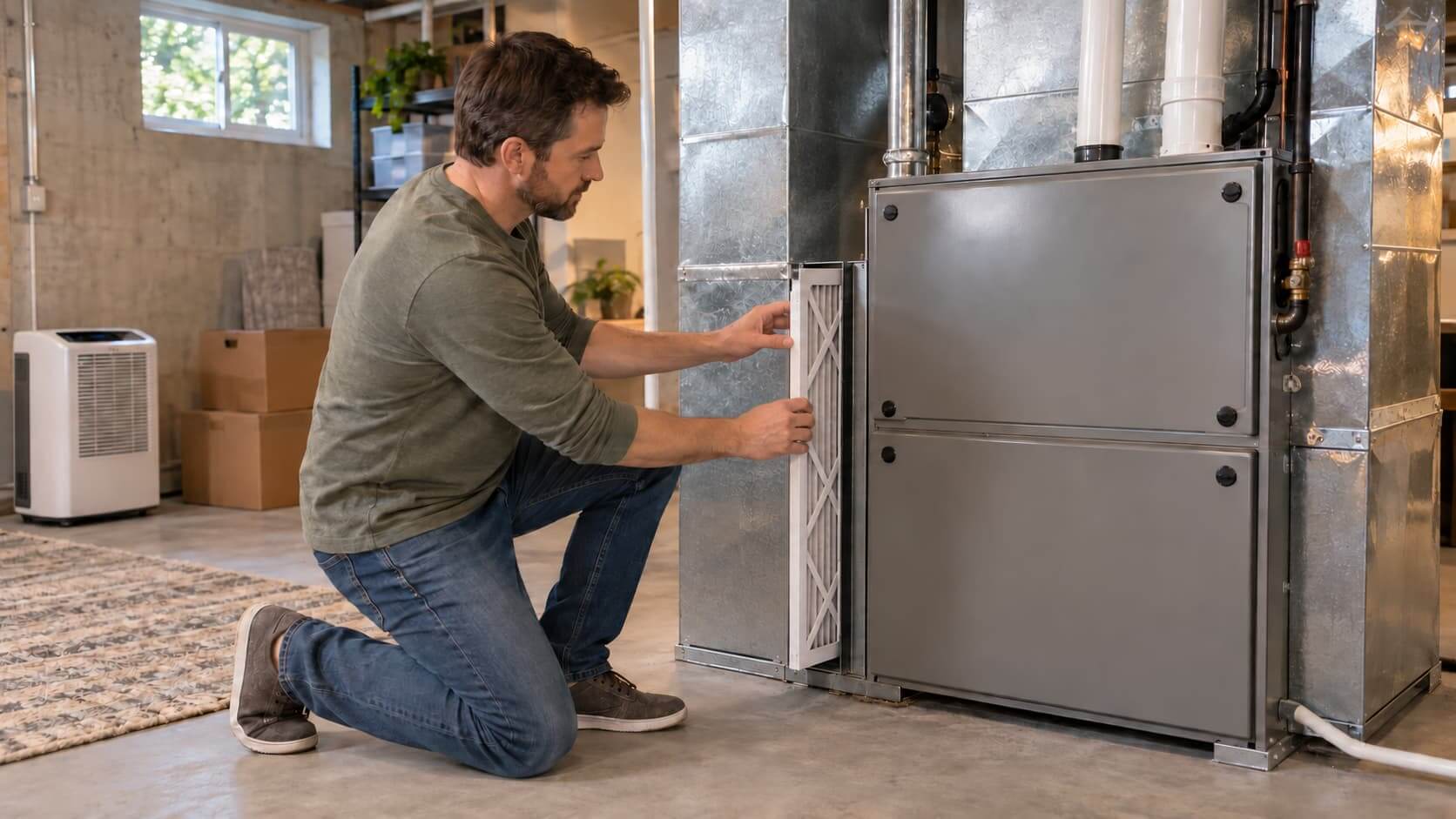
Install the correct size, follow the airflow arrow, and inspect the filter regularly. A dirty filter cannot do its job well and may strain the system. Replacement timing depends on the filter, the home, pets, smoke, construction dust, and how often the system runs.
Use a Portable Air Cleaner in the Right Room
A portable HEPA air cleaner can be useful in a bedroom, home office, or main living space. Match the unit to the room size and place it where airflow is not blocked by furniture or curtains.
Avoid devices that intentionally produce ozone. The EPA’s home air-cleaner guidance explains what filters can and cannot do. Filtration can reduce airborne particles, but it does not replace source control, cleaning, moisture management, or needed ventilation.
Reduce Pollen Brought Indoors
- Leave outdoor shoes near the entrance.
- Change clothes after mowing or extended yard work.
- Shower and wash hair before bed when pollen is high.
- Keep pets brushed and wipe their paws or coat after outdoor time if practical.
- Use damp cloths and mops instead of dry dusting.
- Avoid drying sheets or clothing outdoors during a high-pollen period.
Renters Can Improve Indoor Air Too
Renters may not control the building’s main HVAC equipment, but they still have options.
Ask management what filter the unit uses, who is responsible for replacing it, and how often maintenance is scheduled. Do not install a denser filter without permission if it could affect shared equipment. A correctly sized portable HEPA cleaner is often the most practical renter-controlled improvement.
Report water leaks, persistent dampness, or visible mold promptly. Those are indoor moisture problems, not seasonal pollen, and an air cleaner alone will not solve the source.
Planning Outdoor Life in Omaha
One elevated reading does not mean you need to give up Omaha’s parks and trails. It means you should match the activity to the conditions and the people participating.
On an orange AQI day, a person in a sensitive group may shorten a strenuous bike ride, choose an easier walk, or exercise indoors. On a green-AQI but high-pollen day, that same person might keep the outdoor plan but take allergy precautions recommended by a healthcare professional.
For families, check conditions before sports practices, long playground visits, or all-day events. Schools, coaches, and event organizers may follow their own policies, so watch for direct updates when an alert is active.
When to Talk With a Healthcare Professional
It can be difficult to tell seasonal allergies, respiratory infections, asthma, smoke irritation, and other conditions apart. Consider contacting a healthcare professional if symptoms are new, persistent, severe, repeatedly interfere with sleep or daily life, or do not respond to your usual plan.
People with asthma or another lung condition should have an action plan and know how to use prescribed medication correctly. Do not begin, stop, or change medication based only on an AQI or pollen app.
If you are still choosing local providers, the Move to Omaha healthcare and hospitals guide can help you understand the area’s major systems and care options.
Your Omaha Air and Allergy Starter Checklist
- Bookmark AirNow and add your Omaha-area ZIP code.
- Choose a pollen source that separates tree, grass, and weed pollen when possible.
- Turn on official local alerts on your phone.
- Learn whether anyone in your household belongs to an AQI-sensitive group.
- Confirm the correct HVAC-filter size and the highest rating your system supports.
- Place a portable HEPA cleaner in the room where a sensitive household member spends the most time, if needed.
- Keep an N95 respirator available for smoke events or dusty cleanup tasks.
- Write down healthcare instructions before symptoms flare.
The Bottom Line
Omaha’s changing seasons are part of living here. Spring tree pollen, summer ozone, fall ragweed, and occasional transported smoke can all affect a day outdoors, but they are not the same problem.
Check the AQI, check the pollen outlook, identify what is driving the conditions, and adjust the day instead of automatically canceling it. With a few bookmarks and a sensible home-filtration plan, you can spend less time guessing and more time enjoying Omaha.