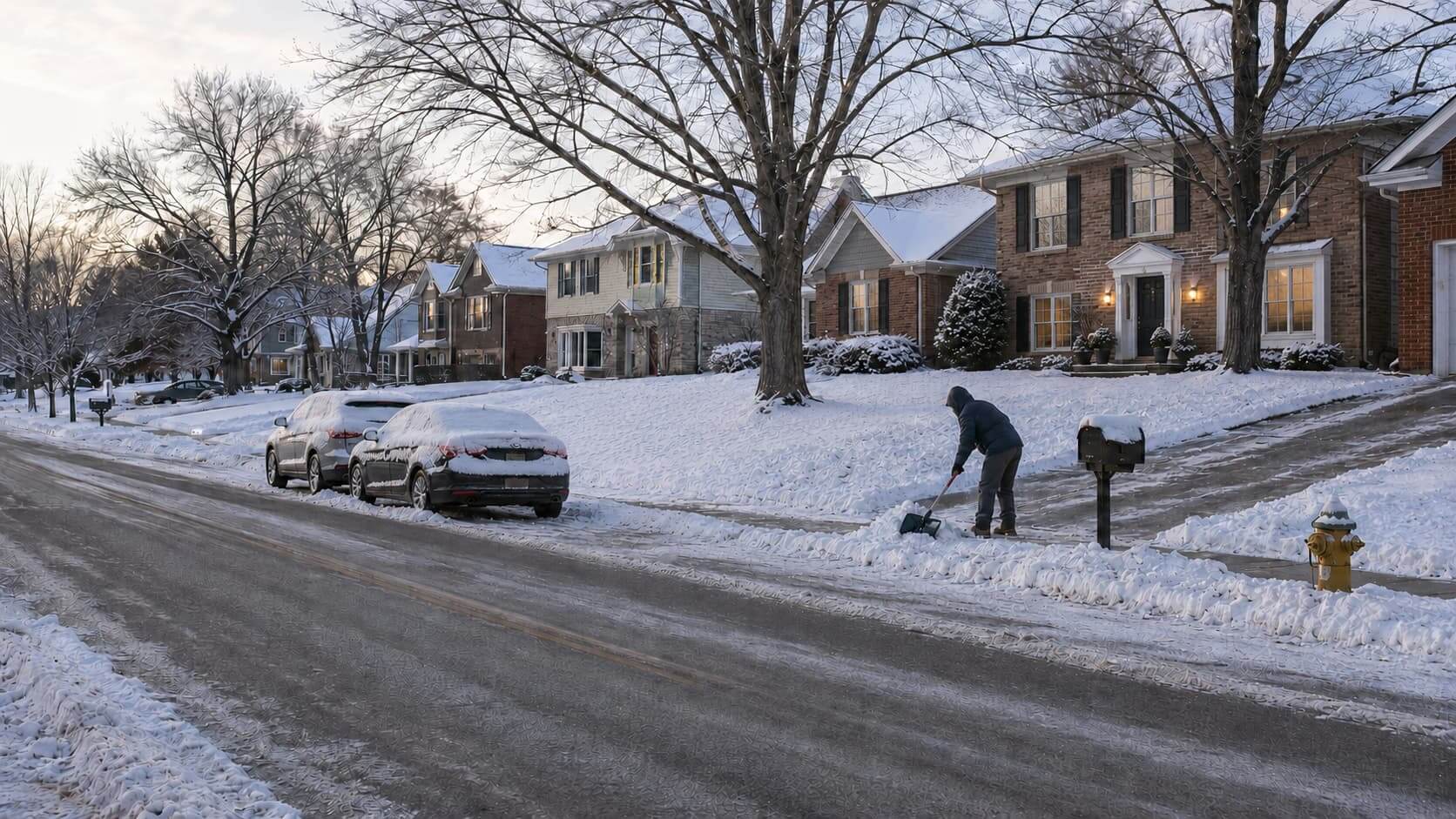
The first meaningful snowfall after moving to Omaha can raise a surprising number of questions. Will the city plow your street? Where should you park? How soon must you clear the sidewalk? What happens when a plow fills the end of your freshly shoveled driveway?
The answers depend on the amount of snow, the type of street, whether Omaha has declared a snow emergency, and even which side of 72nd Street you live on. Rules also change when you cross from Omaha into Papillion, La Vista, Bellevue, or an unincorporated part of Sarpy County.
This guide explains how snow removal works in Omaha, what residents are responsible for, and how to prepare before the forecast turns white.
Quick Answer: Who Clears What After an Omaha Snowstorm?
In general, the City of Omaha is responsible for public streets, while property owners are responsible for the public sidewalks next to their property and for their own driveways.
- Major and secondary streets: City crews treat and plow these streets as conditions require.
- Residential and local streets: Omaha’s current snow plan says these streets are plowed and treated when snowfall accumulation exceeds two inches.
- Sidewalks: Adjacent property owners generally must remove snow and ice within 24 hours after the city declares snow removal operations complete.
- Driveways: Homeowners, landlords, tenants, or a hired service clear private driveways. The city does not return to remove the ridge left by a street plow.
- Private streets: An apartment community, homeowners association, sanitary and improvement district, or other private entity may be responsible.
Do not assume an Omaha mailing address means the City of Omaha maintains the street. The metro includes city streets, county roads, state highways, private streets, and roads maintained by sanitary and improvement districts. If you are unsure, start by confirming whether your home is actually inside Omaha city limits. Our guide to Omaha mailing addresses and city limits explains why the name on your mail is not always enough.
How Omaha Decides Which Streets to Plow
Snow removal is not a single citywide pass. Different crews and contractors work on different street classifications, and the response changes with the forecast, pavement temperature, wind, ice, and total accumulation.
Major streets receive priority
Arterial and collector streets carry the most traffic and connect neighborhoods to hospitals, fire stations, schools, employment centers, and other essential destinations. Omaha works to keep these routes passable before and during a storm. Crews may apply brine or other treatment before precipitation begins when conditions allow, then plow and treat the roads as the storm develops.
A main street can still be slick even after a plow passes. Treatment needs time and traffic to work, and blowing snow can cover a lane again. Bridges, overpasses, hills, intersections, and shaded areas may remain hazardous longer than an open, level road.
Residential streets have a two-inch trigger
Omaha’s Snow Operations page states that residential and local streets are plowed and treated when accumulation exceeds two inches. A light snowfall below that threshold may not bring a plow to every neighborhood street.
During a larger storm, residential streets will not necessarily be bare pavement when the first pass is complete. The immediate objective is to make streets passable. Packed snow, slush, windrows, or ice can remain, particularly during prolonged cold or when vehicles block access.
Your neighborhood may be handled by a contractor
Omaha uses private contractors to supplement city crews on residential routes. That is why the truck on your street may not look like a typical city snowplow. Contractors still follow assigned routes and city specifications.
Cul-de-sacs and narrow streets can take longer because trucks have less room to turn and fewer places to push snow. Cars parked along both curbs make the job even harder and can leave strips of snow that freeze after the plow has gone.
How to Follow Omaha Snow Emergency Parking Rules
Normal winter weather does not automatically activate Omaha’s snow emergency rules. The city must declare an emergency and announce its effective time. Once it begins, special parking restrictions help plows clear streets from curb to curb.
Move off emergency snow routes
Parking is prohibited on designated emergency snow routes during a declared snow emergency. These streets are marked with signs. A vehicle that blocks snow removal may be ticketed, relocated, or towed.
If your home is on a marked route, make a backup parking plan before the snow arrives. Waiting until the emergency takes effect may leave you searching for a legal space after streets are already slick.
East of 72nd Street, use the odd/even rule
On residential streets east of 72nd Street, Omaha uses alternate-side parking during a declared snow emergency:
- On an odd-numbered calendar date, park on the side of the street with odd-numbered addresses. These are generally the south and east sides.
- On an even-numbered calendar date, park on the side with even-numbered addresses. These are generally the north and west sides.
The date changes at midnight, so a multiday emergency may require you to move the vehicle to the opposite side. Look at house numbers rather than relying only on compass direction.
According to the Omaha Police Department’s snow emergency policy, this odd/even rule does not apply to metered streets, parking lots, parking structures, or streets west of and including 72nd Street. Other posted restrictions still apply everywhere. A snow emergency does not make it legal to block a driveway, crosswalk, fire hydrant, intersection, or other normally prohibited location.
West of 72nd Street, clear the street when possible
The odd/even residential rule does not apply west of and including 72nd Street, but moving vehicles into a driveway or garage still gives plows the best chance to clear the full street. Follow posted snow-route signs and any instructions included in the city’s declaration.
Before every storm, check the city’s live page instead of relying on a social media graphic saved from a previous winter. The Omaha Snow Emergency page explains the active restrictions, while local news and official city accounts announce when an emergency begins and ends.
When Omaha Sidewalks Must Be Cleared
Omaha property owners are generally responsible for the sidewalks adjoining their property. The deadline is tied to the city’s announcement, not simply to the moment snow stops falling.
After Omaha declares that snow removal operations are complete, property owners have 24 hours to remove snow and ice from sidewalks. The city’s policy calls for a clear walking area at least four feet wide when snow is placed on part of a sidewalk.
This distinction matters during a long storm. The official end of operations may occur well after the final snowflake, especially when crews are still clearing and treating streets. Watch the city’s updates so you know when the 24-hour window begins.
Do not move snow into the street
Do not push, blow, or shovel snow from a driveway or sidewalk into a street or alley. A pile left in the roadway can freeze, obstruct drainage, narrow the travel lane, and create a hazard for drivers and plow operators.
Place snow on your yard or in the area between the curb and sidewalk when space permits. Keep sight lines open at driveway entrances and corners. Avoid piling snow around fire hydrants, utility equipment, storm drains, or curb ramps.
Renters should check the lease
If you rent a house, duplex, or apartment, do not assume the landlord will automatically shovel every walk. The lease or community rules may assign snow removal to the landlord, a management company, or the tenant. Ask before the first storm and find out which areas you must clear, where snow should be placed, and whether ice melt is supplied.
Apartment residents should also learn where vehicles must go during plowing. A complex may have its own temporary parking rules even when Omaha has not declared a citywide snow emergency. Our guide to renting an apartment in Omaha covers other questions worth resolving before signing a lease.
Why the Plow Puts Snow Back in Your Driveway
Few winter chores are more frustrating than clearing a driveway and then finding a heavy ridge of snow across the entrance. This ridge is commonly called a windrow.
A street plow angles snow toward the curb. When it crosses an open driveway, the accumulated snow rolls off the blade into that opening. The driver cannot lift the blade at every driveway without leaving snow in the travel lane, so clearing the windrow remains the property owner’s responsibility.
You can reduce, but not completely prevent, the problem:
- Wait for the street plow before doing the final cleanup at the curb when your schedule allows.
- Facing the street, clear an extra pocket along the curb on the upstream side of the driveway. This gives some of the plow’s load a place to collect before it reaches the opening.
- Place driveway snow on your property instead of throwing it across the street.
- Clear the entrance wide enough for normal turning after the plow has passed.
- Break up a windrow promptly. It becomes much harder to remove after traffic, refreezing, or very cold temperatures compact it.
Be careful near the road. Wear bright clothing, keep children and pets away, and never work with your back to approaching traffic.
Mailboxes, Fire Hydrants, Storm Drains, and Trash Carts
Street clearing affects more than the pavement. A few small steps can protect access to your home and help neighborhood services continue.
Give the mailbox room
If you have curbside mail delivery, clear a safe approach to the mailbox without placing snow in the street. The U.S. Postal Service asks customers to keep approaches to curbside boxes clear so carriers can reach them without leaving the vehicle or backing up.
Before winter, check whether the post and box are sturdy. A properly placed mailbox should withstand routine snow thrown from a plow, although wet, heavy snow can expose a weak or deteriorated installation.
Keep hydrants visible
If a fire hydrant is on or near your property, clear snow around it when you can do so safely. A visible, accessible hydrant saves firefighters from digging before they can connect a hose. Create space around the hydrant and a path toward the street without standing in traffic.
Open storm drains as melting begins
When temperatures rise, a blocked storm drain can allow meltwater to pool and refreeze. If you can safely identify and reach the drain without entering the street during traffic, remove loose snow and debris from the opening. Report drainage problems rather than attempting to move a frozen grate or enter a flooded area.
Do not let carts block the plow
Winter weather may delay trash and recycling collection. Keep carts off the travel lane and do not set them on top of a snowbank where they can tip. If collection is postponed, follow the city’s current instructions instead of leaving carts in a place that interferes with plowing.
What to Do if Your Street Is Missed or Something Is Damaged
A street that has not been plowed is not necessarily missed. It may be later in the route, below the residential plowing threshold, privately maintained, or waiting for a second pass.
Check the live snow-operations map before submitting a report. It shows the city’s current operational status and available route information. Allow crews time to finish the announced operation, especially during a large or wind-driven storm.
If nearby streets on the same route are complete but yours appears to have been skipped, use Omaha Public Works’ online issue-reporting page. Provide a specific address or intersection and describe the problem clearly.
Photograph suspected property damage before moving or repairing the affected item. Snow pressure can damage a mailbox that was already loose, while a plow or contractor may cause direct damage in other cases. Clear photos, the location, the approximate time, and any identifying vehicle information make a report more useful.
For a downed power line, gas odor, medical emergency, crash, or other immediate danger, do not use a routine street-maintenance form. Stay away from the hazard and contact the appropriate emergency service. The MoveToOmaha utilities guide lists the major local utility providers and contact information.
Snow Rules Change Across the Omaha Metro
One of the easiest mistakes for a newcomer is following Omaha’s rules at a home governed by another city or county. Do not use the 72nd Street odd/even rule as a metro-wide rule.
Papillion
Papillion declares a snow emergency when snow depth reaches two inches. Its ordinance requires vehicles to be removed from city streets during the emergency, with vehicles remaining on the street subject to citation and impoundment. Papillion’s public works information directs residents to report vehicles on city streets during a snow emergency through the Sarpy County dispatch non-emergency line.
La Vista
La Vista says a snow emergency takes effect when at least two inches of snow, ice, or sleet has accumulated on streets, or when the mayor declares one. During the emergency, vehicles cannot remain on public streets for 24 hours or until the street has been plowed. A vehicle that is not moved can be towed at the owner’s expense.
Unincorporated Sarpy County and SIDs
Sarpy County prioritizes hard-surface county roads, followed by roads leading to schools within SIDs. Its plan advises residents to move cars off streets and cul-de-sacs before plows arrive. County crews do not clear private driveways or sidewalks and may leave snow at driveway entrances while opening the roadway.
An SID may contract separately for neighborhood snow removal. That means the timing and service standard inside the subdivision can differ from the county road leading to it. If your property is in an SID, check the district’s notices or ask the property manager or HOA who holds the snow-removal contract. Learn more in our guide to sanitary and improvement districts in Omaha.
Bellevue and other metro communities also maintain their own rules and announcements. Confirm your jurisdiction and use its official website whenever winter weather approaches.
Build a First-Snow Plan Before You Need It
A little preparation makes Omaha’s first storm far less stressful. Complete this checklist while the pavement is still dry:
- Confirm who maintains your street. Determine whether it is an Omaha street, state highway, county road, SID route, or private street.
- Find your parking alternative. Know where every household vehicle can go if street parking is restricted.
- Locate the address sides. If you live east of 72nd Street, identify the odd and even sides before a snow emergency.
- Inspect your equipment. Check the shovel, snow blower, extension cords, fuel, batteries, scraper, and ice melt.
- Clarify shared responsibilities. Renters, HOA members, and residents with shared drives should know who clears each area.
- Choose a safe place for snow. Keep it out of streets, alleys, storm drains, hydrant access, and sight lines.
- Save official resources. Bookmark Omaha’s snow page, your local jurisdiction’s alerts, and Nebraska 511 for current highway conditions.
Use Snow Removal Equipment Safely
Snow can be much heavier than it looks, particularly when it is wet or has been compressed by a plow. Work in shorter sessions, push snow when practical instead of lifting it, and take breaks before you become exhausted. People with heart disease, limited mobility, or other health concerns should ask a healthcare professional whether shoveling is appropriate and consider arranging help in advance.
Keep hands away from a clogged snow blower. Turn the machine off, disconnect the spark plug or power source as directed by the manufacturer, wait for moving parts to stop, and use the supplied clearing tool. The U.S. Consumer Product Safety Commission warns never to use hands to clear a clogged discharge chute.
Use ice melt according to the label. More product is not necessarily better. Consider the surface, temperature range, nearby plants, and pets that may walk through the treated area. Wipe pets’ paws after walks when salt or deicer is present.
What New Omaha Residents Should Remember
Omaha winter snow removal becomes much easier once you understand the division of responsibility. The city handles public streets according to its snow plan, property owners handle adjoining sidewalks and private driveways, and drivers must follow special parking rules when a snow emergency is declared.
The most important details are easy to remember:
- Residential plowing generally begins when snowfall exceeds two inches.
- Emergency snow routes must remain clear during a declared snow emergency.
- Odd/even parking applies on qualifying residential streets east of 72nd Street, not across the entire metro.
- Sidewalks generally must be cleared within 24 hours after Omaha declares snow operations complete.
- Do not shovel or blow snow into a street or alley.
- Rules in Papillion, La Vista, Sarpy County, and other nearby jurisdictions are different.
Bookmark the official snow page, make room for vehicles before a storm, and give yourself more time than usual to travel. Omaha winters are manageable when you know what the city will do, what belongs on your own checklist, and where to find current information.


